Travels to Tuscany & Northern Lazio
July 4th, 2012 Tagged with: Bologna • Bonnie Prince Charlie • early travelers in Italy • exiled English kings in Italy • Florence • Grand Tour • Henry Cardinal Stuart • John Ingamells • Montefiascone • northern Lazio • Orvieto • Pisa • Stuarts, exiled English kings in Italy • Tuscany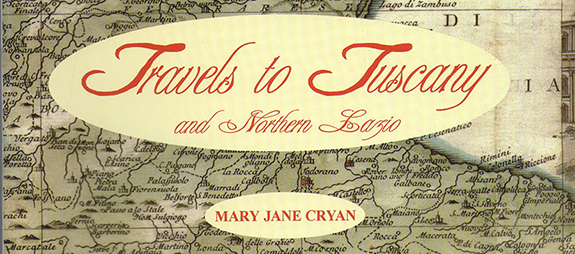
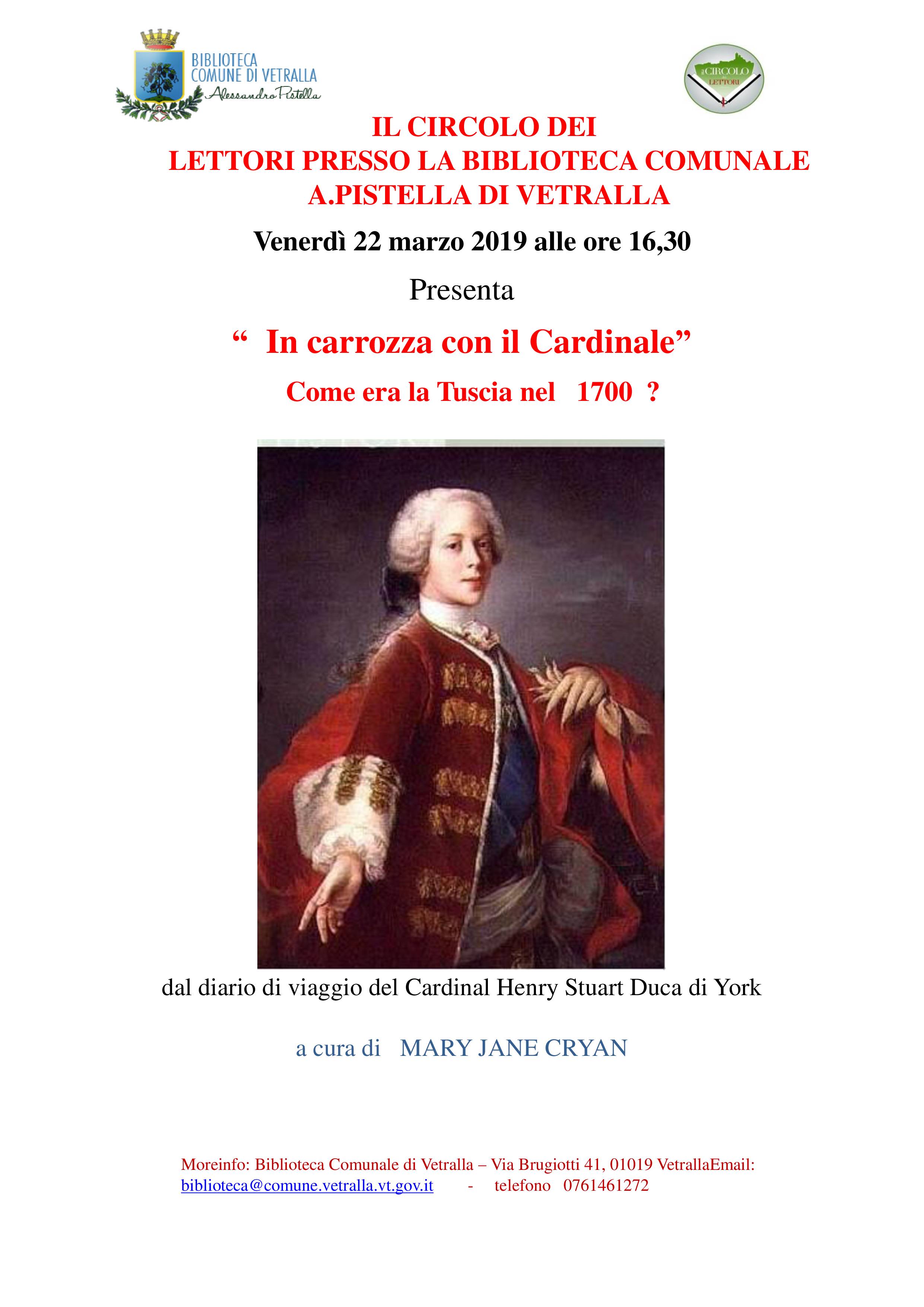
Author Mary Jane Cryan presented “In Carrozza con il Cardinale” based on the diaries of Cardinal Henry Stuart and her book “Travels to Tuscany and Northern Lazio ” March 22, 2019 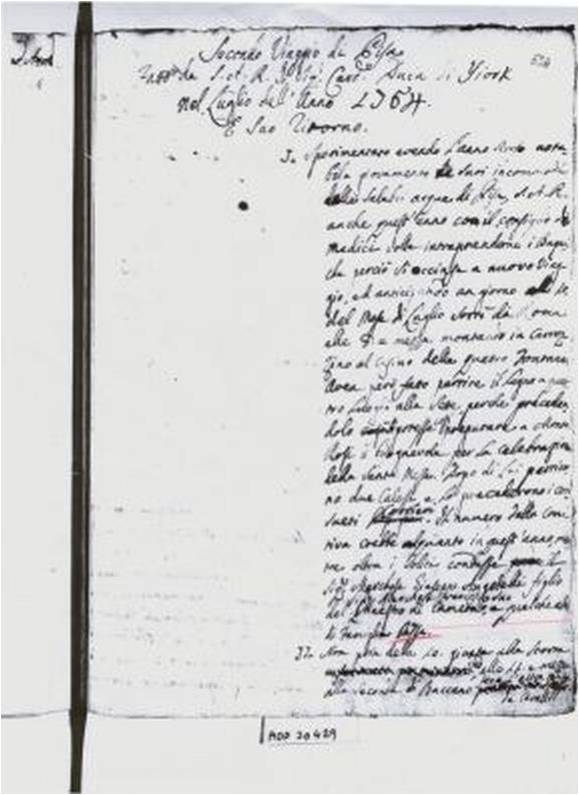
Author Mary Jane Cryan spoke to the 1745 Association in Rome, May 18th, 2015
Jacobite fans came to Rome for a 4 day conference and tour following in the footsteps of Cardinal Henry Stuart . Mary Jane was invited to present an illustrated lecture on the Cardinal’s Diaries which form the basis for her book “Travels to Tuscany and Northern Lazio” .
Among the attendees Prof. Edward Corp and Elizabeth Corp (far left of the photo), Brian Whiting editor of the Jacobite review and organizer Benedicta Froelich.
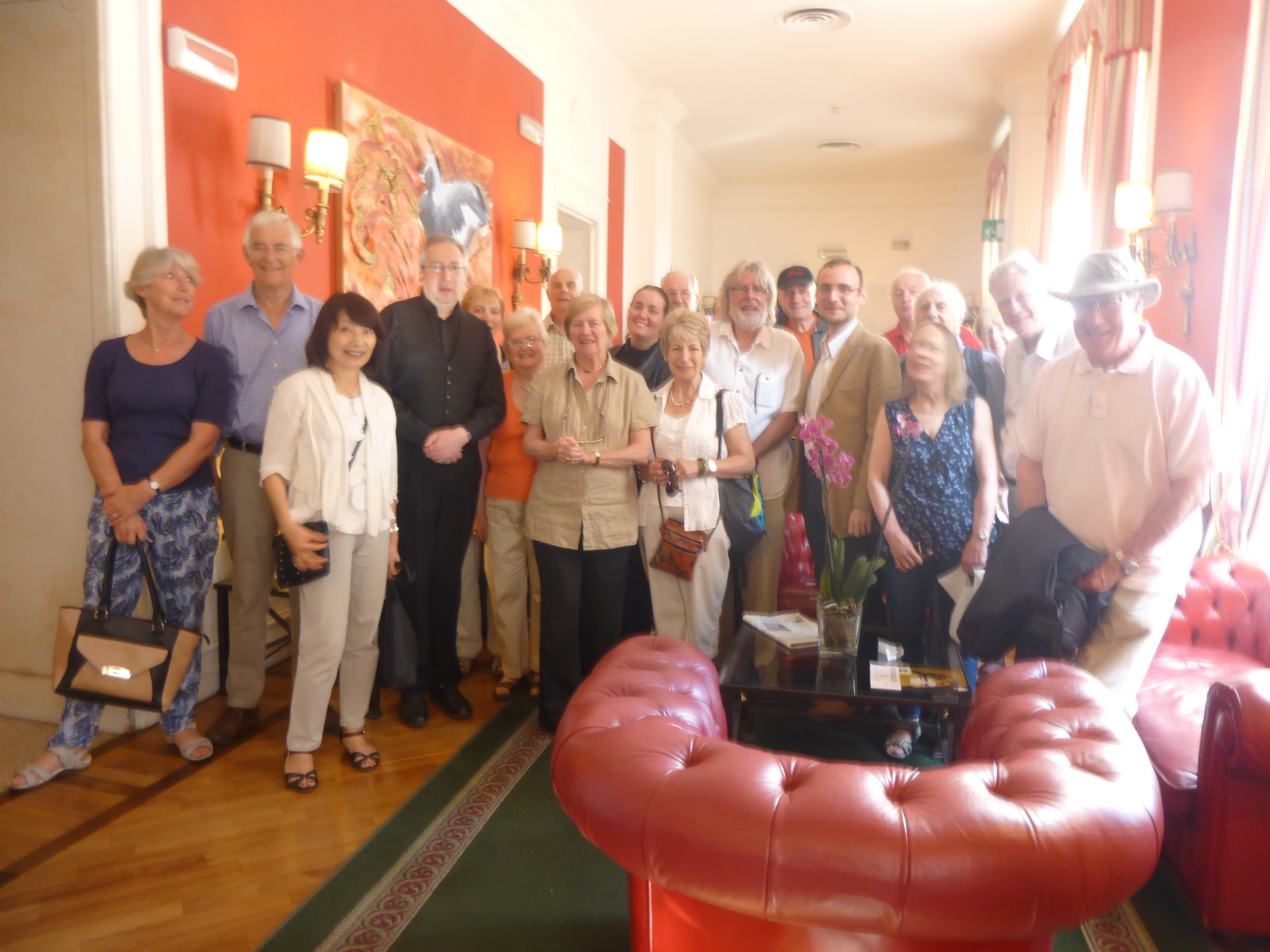
The entire group 1745 Association
Nuovo Nord Roma hotel, breakfast on the terrace
This historical «on the road» is based on the travel diaries of Henry Cardinal Stuart and other historic travellers to central Italy. A precious instrument for art students, historians who like to travel and for travellers who enjoy history, this book shows what Tuscany and northern Lazio were like in the 1700s. Rare, previously unknown descriptions of towns, travel and life in 18th century Italy. -Valuable primary sources for scholars and a compelling blueprint for today’s travellers, leading us to re-discover forgotten monasteries, villas, spas, and art treasures that are usually overlooked by modern travellers.
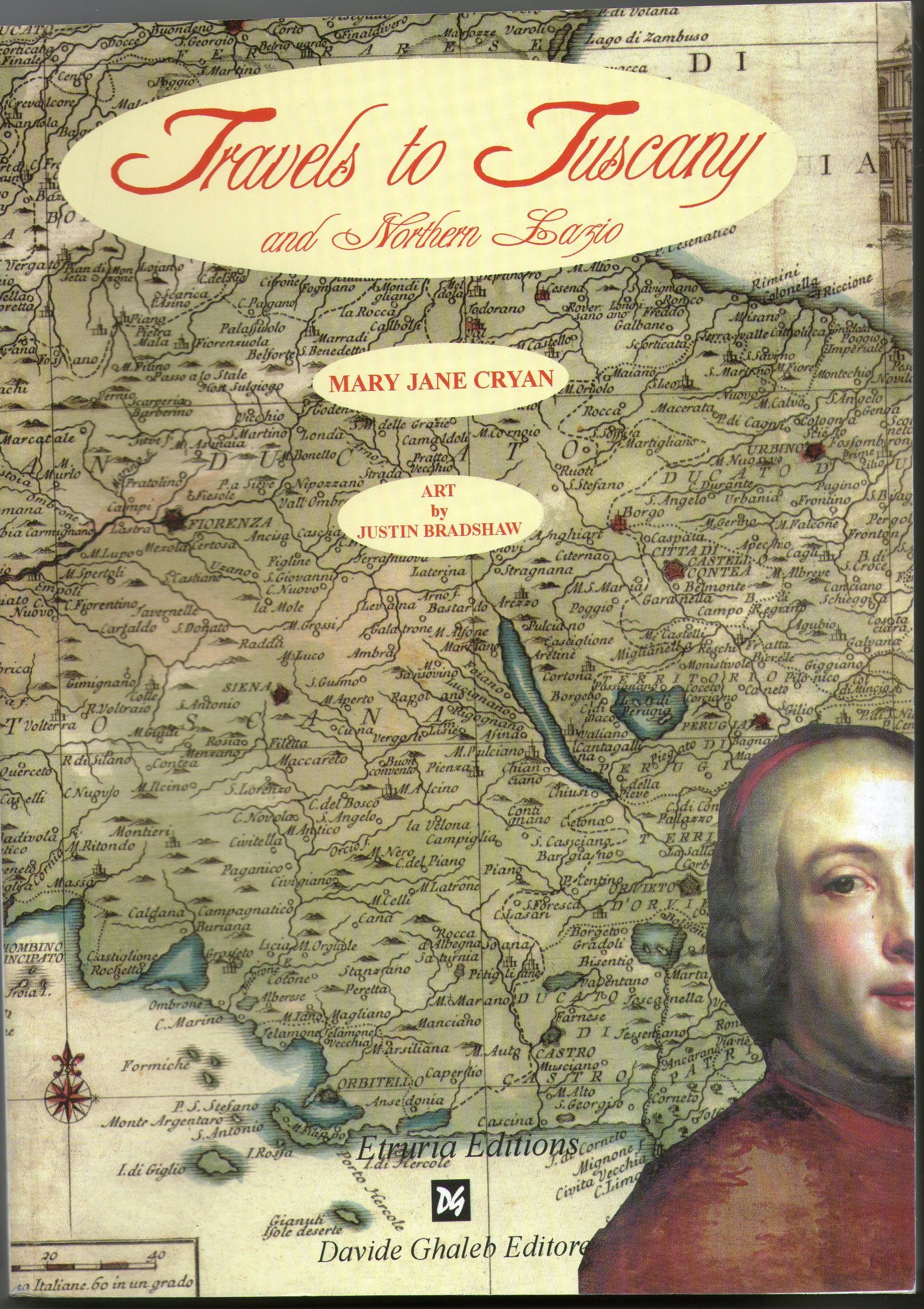 Discover what Siena, Pisa, Lucca and Bologna were like in the summer of 1763. The 1764 voyage included Florence where the Cardinal admired palazzi, churches, villas and gardens.
…A fascinating picture of a royal progress … the reader is tempted to jump on the next plane to Rome and retrace the Cardinal’s footsteps, book in hand. A book that will be welcomed by anyone interested in the Stuarts, in 18th century travel in Italy, in Catholic ritual and in the relatively little-known area of northern Lazio. The author also gives thumbnail sketches of the towns for the present-day visitor. There are excellent footnotes, a glossary, a bibliography and a list of websites. The book is beautifully illustrated with a mix of contemporary engravings, photographs, sketches and maps by Justin Bradshaw. Jane Clark, Royal Stuart Review 2005
10 3 COPIES OF THIS BOOK still available
you can find copies at the Anglo American Bookshop in Rome
order directly from this website , buy it on my ebay page or send an email to macryan at alice dot it
A glimpse of 18th century travel as experienced by high ranking ecclesiastical authorities and noblemen. The heart of this thoroughly researched and well- documented book is a travel diary kept by Don Giovanni Landò, secretary to Cardinal Henry Stuart, Duke of York who made three trips to Tuscany and Northern Lazio– Cryan has done a fine, very readable translation of Landò’s prose.
Not just a specialist’s book. The diary’s minimalist portrayal of ordinary life will exert its fascination on modern day travelers. Departure times and arrivals are meticulously noted and we learn how long it took to ride from one post station to another. There are descriptions of churches visited and of the treasures and reliquaries they contain, as well as of the sumptuous food served at banquets — the Cardinal enjoyed game, gelati and chocolate. Gifts given and received are recorded — money, jewels, and food.
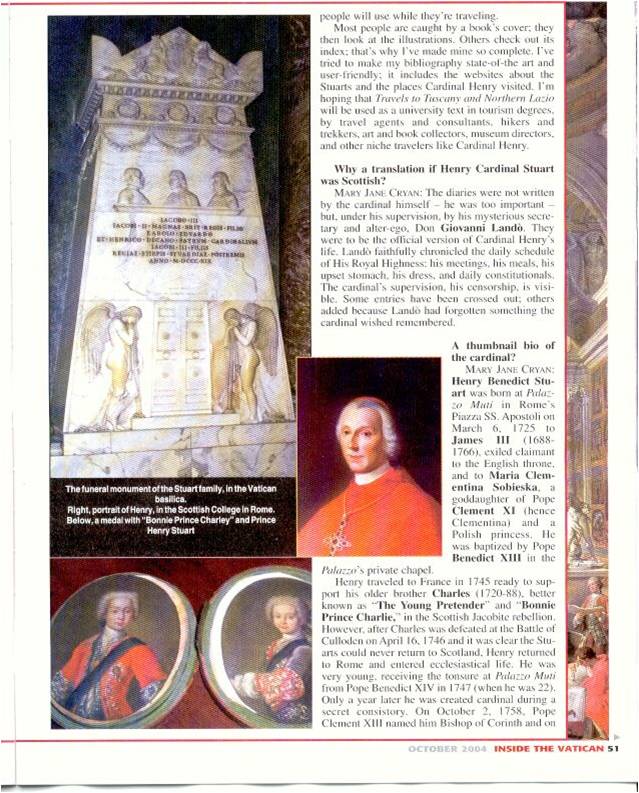
In addition to the text of Landò’s diary, previously unpublished in any language (the second part of the book contains the full text in Italian) Cryan provides a wealth of historical information to help set the scene: maps of the Cardinal’s itineraries, old prints of the areas visited, period illustrations of vestments and clothing, even a bill for the repair of a carriage. She explains how to tell time using the antique Italian system, and how to convert antique measuring units into meters. She lists by name the 76 members of the Cardinal’s traveling party, which included sweepers, porters, stableboys, a doctor, wardrobe attendants, cooks, and musicians and provides a list of prices for basic necessities from the local grocer. These practical details, often overlooked by studies of larger canvas, are the stuff of historical reconstruction which allow the reader to have more tangible sense of daily life in a remote era.
A brief chapter of other travelers to the area completes the volume, along with a description of the places visited on the Cardinal’s three journeys as they are today.
Mary Jane Cryan makes her home in Vetralla, a town in Tuscia, a unique corner of Italy, nestled between Rome and Tuscany in the rustic and unspoiled natural setting of the Cimini Hills. Thoroughly acquainted with the history and culture of the area, she has dedicated a decade to ferreting out its hidden history. Lying between the greater area of Rome and the Val d’Orcia, the towns of the Tuscia have always served an important function as rest stops along the old pilgrims’ road to Rome. Kings, cardinals, pilgrims, intellectuals, writers and painters – from Turner to M.C. Escher, from Edith Wharton to D.H. Lawrence, have trod these roads. In retracing the steps of travelers throughout history to the Tuscia , Cryan has helped fill in a blank space on the map of the Grand Tour, for much documentation still lies buried in archives. Her books are a mine of information, anecdotes, and curiosities for all those interested in delving deeper into the history the area. Prof. Linda Lappin, Tuscia University
NEW POSTAGE RATES
are always changing, best to contact me first
for up to date info
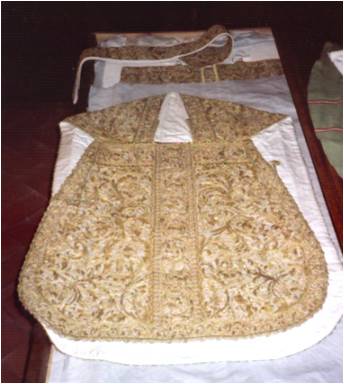
Stuart vestments conserved in Montefiascone
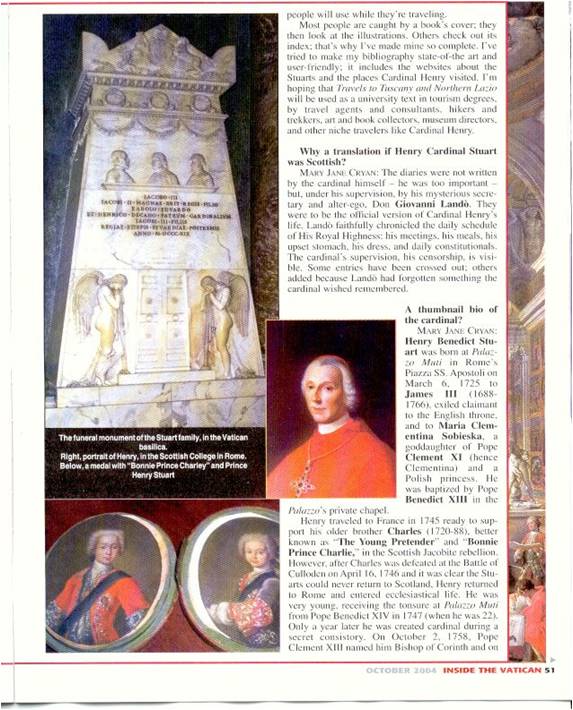
7 page article and review by Lucy Gordan in ” Inside the Vatican” magazine
This book is a quite fascinating account from the diaries of Henry, Cardinal Duke of York, kept by his indefatigable secretary, Don Giovanni Lando, extracted from the 36 volumes of the diary, bound in brown leather and stamped in gold and now held in the British Library. These volumes were acquired in Rome in 1842 by Baroness Braye of Stanford Hall, and placed in the British Library in 1877. Mary Jane Cryan has extracted and translated accounts of three jaunts by Cardinal Henry to Pisa in 1763, and again in 1764, and to Viterbo and Orvieto in 1776, the book also gives the original Italian text. Amongst the colour illustrations are Jacobite portraits, memorial plaques and an impeccably provenanced bust of Henry in the Town Hall of Vetralla, which are overlooked in other Jacobite literature. The diaries record how Henry travelled in immense style and luxury, showering his hosts with luxurious gifts and receiving equally sumptuous tributes, accompanied by a large number of the recorded seventy-six members of his “family” (his servants, or court, of high and low degree.) I can thoroughly recommend this book as one that gives a lively account of the regal style in which Henry comported himself, and a delightful account of little-known contemporary Italian towns and lifestyle.
F. Peter Lole “The Jacobite”
As well as giving an insight into 18th century travel, the diaries contain invaluable information about 18th-century dress, church ritual and a cardinal’s routine. Churches and towns visited are described with great detail. Of special note are those of Orvieto and Florence and the Uffizzi gallery. The author, who is an historian and journalist, gives informative annotations – for example, as to whether churches and families mentioned still exist – allowing the modern reader to link past with present.
Wanted in Rome, Oct 2004
With this edition of the travel diaries of Henry Cardinal Duke of York, the author offers a precious, new instrument for understanding the cultural patrimony of Tuscany and the Viterbo areas in the 18th century . Prof. Carlo Tedeschi – University of Venice
Very clear and evocative…an excellent work…an important revelation for curious travelers and historians.
Prof. Maurizio Ascari – University of Bologna
Signed copies are available directly from the author. 18 euro plus postage.
Payment options include paypal. Free postage to Italian addresses.
Reviews in Italian
Il libro di Mary Jane Cryan “Travels to Tuscany & Northen Lazio” è la cronaca di un appassionante diario di viaggio, ricco di annotazioni, che ci consentono di approfondire la conoscenza degli usi e costumi, il modo di viaggiare e le curiosità della vita di corte del cardinale Enrico Stuart, (1725– 1807) l’ultimo erede della famiglia reale inglese in esilio in Italia, che si attribuì il titolo di “Altezza Reale”.
Presentato con successo ad Oxford, a Pisa e alla Biblioteca degli Uffizi in Firenze da Cristina Acidini, il libro è una preziosa fonte di informazioni per gli esperti e gli amanti d’arte e ci consente di rivedere in una nuova prospettiva molto “regale”, le città dell’Italia centrale, i monumenti, i monasteri e le terme. Questi territori di grande bellezza vantano palazzi e nobili dimore dove tutt’oggi è possibile soggiornare ospiti magari dei discendenti delle stesse famiglie che accolsero il Duca di York durante i suoi viaggi in Italia centrale fra 1763 e 1776.
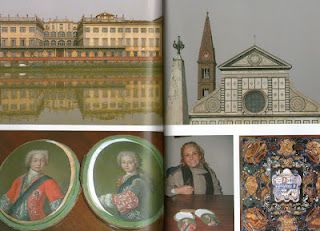
16 pages of color photos plus several maps drawn by Justin Bradshaw of the Cardinal’s itineraries
Città e località descritte nel libro
Ronciglione – Viterbo – Vetralla
Caprarola – Montefiascone
Bolsena – Aquapendente
Centeno – Orvieto
Radicofani -S.Quirico d’Orcia
Buonconvento
Monte Oliveto Maggiore
Lucca – Siena – Staggia
Poggibonsi – Certaldo
Castel Fiorentino – Cascina
Pontedera – Pisa – Pistoia
Firenze – Caffaggiulo
Bibiena – San Miniato
Bologna – Castel S. Pietro
Castel Bolognese – Forlì
Cesena – Savignano
Rimini – Cattolica
Pesaro – Fano
Senigallia – Ancona
Loreto – Macerata
Tolentino – Foligno
Spoleto – Otricoli
Civita Castellana
Only 10 copies remain.
To order a signed copy directly from the author, click on the link below. 18 euro plus postage. Payment options include paypal, bonifico bancario . Copies are available in Rome at the Anglo American bookshop, Via della Vite, near Spanish Steps.
Rimangono solo 10 copie .  Per ordinare una copia firmata del libro cliccate qui sotto…SOLO 10 COPIE RIMANGONO
Click here to order your copy ONLY 10 COPIES OF THE BOOK LEFT
Reviews in italiano
Travels to Tuscany and Northern Lazio
“Questa opera contiene alcuni interessanti documenti inediti riguardanti il cardinale Enrico Stuart, duca di York, che visse fra il 1725 e il 1807. Lo scopo dichiarato di questa pubblicazione è quello di promuovere la conoscenza del patrimonio culturale della Tuscia viterbese, della zona di Orvieto e della Toscana. Di fatto esso rappresenta un prezioso documento anche per approfondire la conoscenza degli usi e costumi dell’epoca, specialmente per quanto riguarda le famiglie nobiliari e i modi di viaggiare. Per la congregazione della Passione e, in genere per gli studiosi di S. Paolo della Croce, la figura del cardinale Enrico di York riveste un particolare interesse per i rapporti che quest’ultimo ebbe con il santo Fondatore e con i primi passionisti sul finire del secolo XVIII e l’inizio del secolo XIX.
L’opera contiene i diari di due viaggi compiuti in Toscana negli anni 1763 e 1764 e a Viterbo e Orvieto nel 1776 dal cardinale duca di York con un numeroso seguito di cortigiani e servitori. I diari furono stesi in italiano dal segretario del cardinale, don Giovanni Landò. L’opera presenta anzitutto la traduzione inglese dei diari seguita dall’originale italiano. Oltre le 32 pagine d’illustrazioni ci sono molte altre illustrazioni nel testo. Una introduzione presenta il background storico ed è seguita da una cronologia essenziale della vita del cardinale. Vengono poi offerte alcune spiegazioni riguardanti il modo in indicare le ore del giorno, le monete in uso, le misure di lunghezza e c’è una lista completa di coloro che accompagnarono il cardinale nei suoi viaggi. Si parla poi anche di altri viaggiatori che, attraverso i secoli, percorsero l’alto Lazio e la zona di Orvieto.
Lo scopo dei primi due viaggi era quello di raggiungere la località di Bagni San Giuliano presso Pisa, dove il cardinale intendeva sottoporsi alle cure termali. Come si osserva nell’introduzione, oltre a questo scopo i viaggi offrirono al cardinale l’opportunità di incontrare nobili e governanti nelle città che visitò. Il primo viaggio mosse da Roma e, attraverso Viterbo, Montefiascone e Bolsena raggiunse Siena e poi Pisa. Seguirono visite alla Certosa di Calci, a Lucca, Pistoia e Bologna mentre il ritorno avvenne lungo l’Adriatico, passando per Loreto, e poi per Tolentino,Foligno, Spoleto, Civita Castellana. Il secondo viaggio mosse da Roma per Montefiascone, Bolsena e Siena arrivando a Firenze. Seguì il viaggio a Pisa, le cure, il ritorno per Siena, Monte Uliveto Maggiore, S. Quirico d’Orcia, Montefiascone, Viterbo.
Il terzo viaggio toccò , come detto, Viterbo e Orvieto. Esso riveste un certo interesse per noi perché vi è descritta la visita che il cardinale fece a Vetralla, il luogo dove Paolo della Croce passò la maggior parte della sua vita di religioso e di fondatore, da cui scrisse moltissime lettere. Tra le persone che il cardinale incontrò a Vetralla si trova Leopoldo Zelli, amico e benefattore del Santo Fondatore e destinatario di varie sue lettere.
Il cardinale duca di York fu un personaggio molto importante della Curia Romana del Settecento, forse un po’ dimenticato dagli storici. Ritendendosi il solo legittimo erede della corona d’Inghilterra, assunse il nome di Enrico IX e si faceva dare dai familiari il titolo di “Altezza Reale” e di “Maestà”. D’altra parte il fiero cardinale era stimato dal grande pontefice Benedetto XIV (Lambertini). Il suo rapporto con i passionisti fu dapprima di grande favore: egli, vescovo di Frascati fu un vero benefattore del convento di Monte Cavo. Ci furono poi delle tensioni per le sue richieste di servizi pastorali che il Fondatore e gli altri passionisti consideravano contrari alle Regole. Seguì la riconciliazione. Sempre, però, ci fu reciproca stima. Tanto i documenti qui pubblicati quanto le numerose illustrazioni rappresentano un materiale importante per il progresso degli studi storici sul Settecento.
Padre Adolfo Lippi c.p. su “La Sapienza della Croce”, rivista dei Padri Passionisti italiani
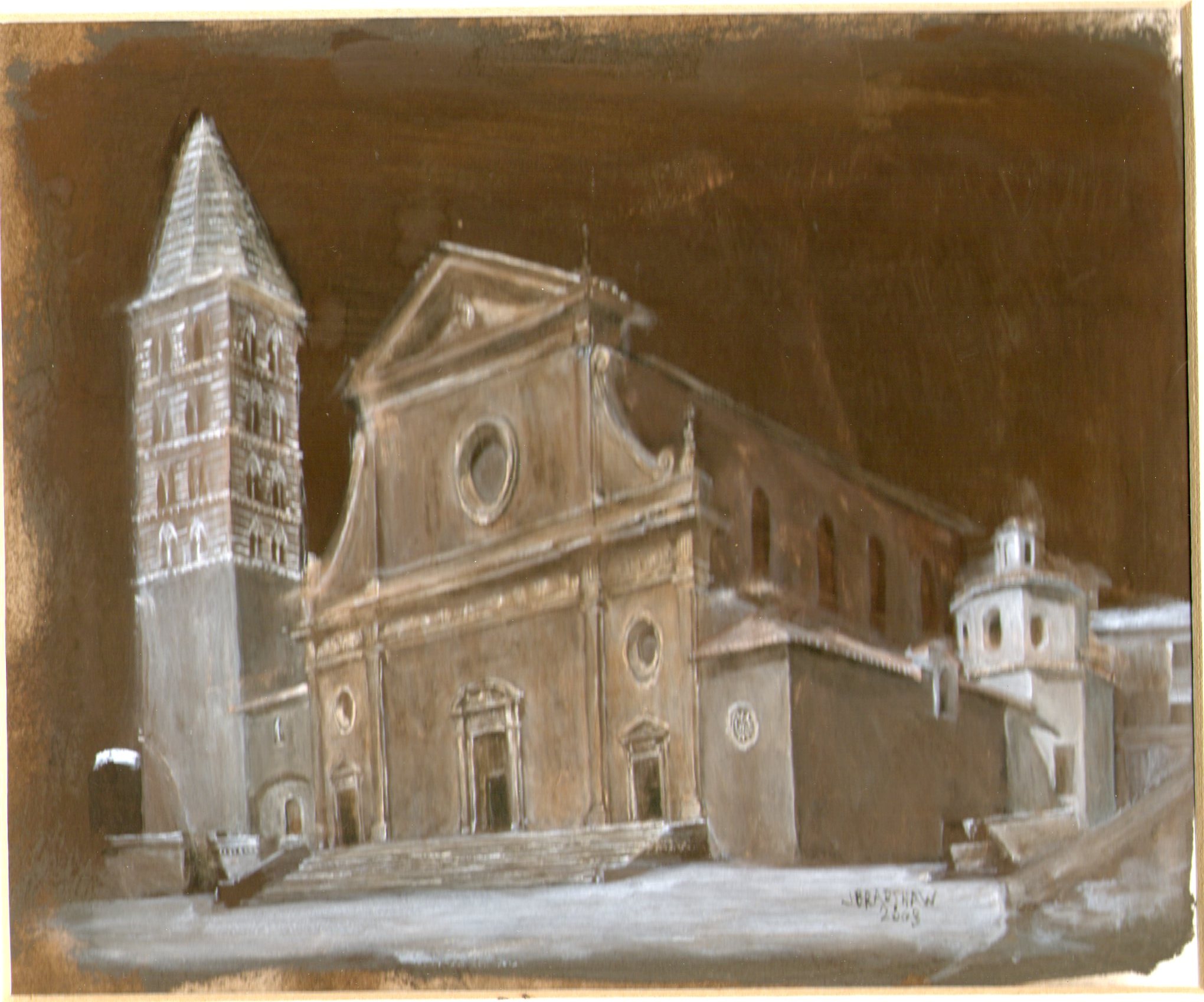
Duomo di Viterbo, Justin Bradshaw
Travels to Tuscany and Northern Lazio
by Mary Jane Cryan
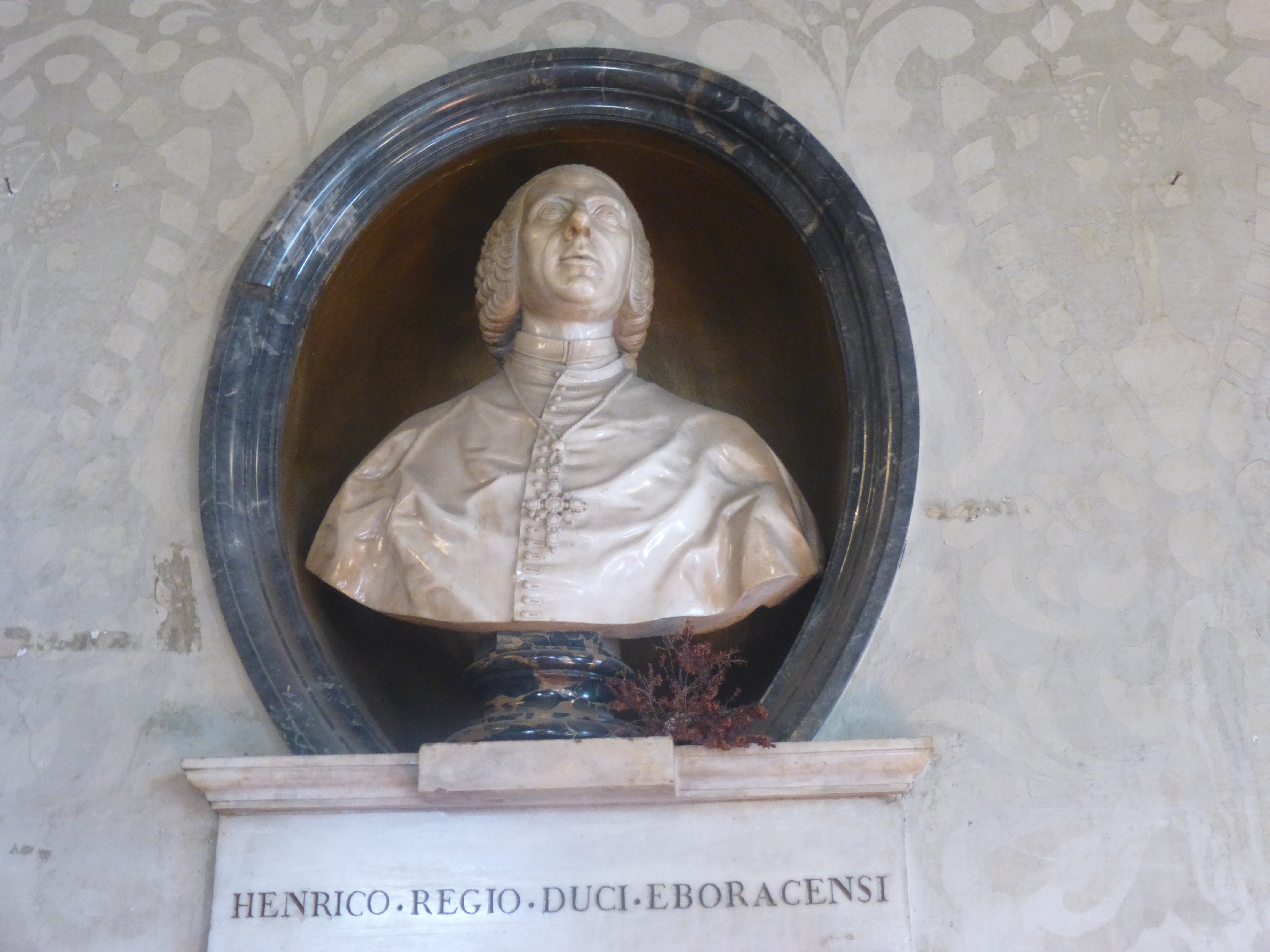
Un busto di un cardinale inglese del diciottesimo secolo, Henry Stuart, Duca di York, situato all’interno del Municipio di Vetralla, ha suscitato l’interesse della scrittrice e giornalista di origine irlandese, Mary Jane Cryan. La presenza di tale reperto storico, di cui paradossalmente nessun abitante del posto si è mai interessato, l’ha incoraggiata nella difficile ricerca di eventuali collegamenti tra il tranquillo paese e l’alto Prelato. L’unico elemento certo, è una data, il 1802: anno in cui il busto fu donato alla città di Vetralla dallo stesso Cardinale in ricordo della sua visita avvenuta nel 1776.
Il prodotto di questo suo lavoro certosino è la pubblicazione di Travels to Tuscany and Northern Lazio: il libro si basa su annotazioni, scritte dal segretario particolare del Cardinale, Don Giovanni Landò, in occasione dei viaggi che entrambi intrapresero tra il 1763 e il 1776. Successivamente furono raccolti in un diario di 36 volumi conservato al British Library di Londra dove furono scoperti dalla Cryan tre anni fa.
Gli appunti di viaggio rappresentano una preziosa fonte d’informazioni per gli amanti ed esperti dell’arte, poiché sono ricchi di descrizioni di monumenti e di chiese, con particolare attenzione agli addobbi degli altari e alla trascrizione di epigrafi latine. Inoltre, il lettore viene a conoscenza di scorci di vita quotidiana: si veda a proposito il minuzioso elenco dei cibi consumati dal Duca di York e dei doni che lo stesso ricevette e offrì nel corso dei suoi viaggi. Da sottolineare, anche, le numerosissime annotazioni degli orari d’arrivo e di partenza del convoglio cardinalizio e le difficoltà negli spostamenti, dettate soprattutto dal timore di trovare le porte delle città chiuse nelle ore notturne. Le cattive condizioni di salute di cui soffriva l’alto Prelato furono uno dei principali motivi del suo primo viaggio quando egli soggiornò a lungo ai Bagni di San Giuliano nei pressi di Pisa, luogo famoso per le sue acque miracolose. E’ interessante anche la visita della città di Bologna e della sua Università, centro di cultura dove incontrò la stimata scienziata Laura Bassi. Henry Stuart si allontanò da Roma a causa della sua malferma salute, ma anche per motivi politici: infatti, il secondo viaggio avvenuto a Firenze e Pisa nel 1764, rappresentò un’occasione d’incontro con alte cariche pubbliche dell’epoca. L’ultimo soggiorno, risalente al 1776, lo vide attraversare la terra degli Etruschi, Orvieto, Viterbo e altri paesi a nord del Lazio.
Del Cardinale Stuart, si è a conoscenza di molti dati: nacque e visse in Italia, era figlio di Giacomo III, pretendente al trono d’Inghilterra e di una principessa polacca, Maria Sobieska; fu Vescovo della diocesi di Frascati per circa 30 anni e nella corte pontificia aveva un ruolo d’importanza enorme. Secondo le testimonianze dell’epoca, egli era un uomo generoso, fanatico collezionista di libri antichi e d’opere d’arte, ma anche, dedito ai piaceri materiali della vita.
Travels to Tuscany and Northern Lazio rappresenta un nuovo omaggio culturale della scrittrice alla Tuscia che lei ha eletto a seconda patria: la predilezione per questa terra è testimoniata dalla pubblicazione di altri due interessanti libri Affreschi Exploring Etruria in collaborazione con N. M. Roberson e Vetralla: The English Collection. La Tuscia, va ricordato, era un importante luogo di passaggio e di sosta per i pellegrini diretti alla Città Santa. L’autrice dedica un capitolo a altri viaggiatori , fra cui intellettuali, scrittori e artisti di varie nazionalità che hanno attraversato questo angolo incontaminato della penisola italiana.
Dalla perspicace professionalità della sua autrice è nato un testo che eccelle per meriti: infatti, M.J. Cryan ha saputo gestire con grande abilità e perizia un argomento di difficile trattazione. In primis, va sottolineata la non facile analisi alla quale gli appunti di Don Giovanni Landò sono stati da lei sottoposti: infatti, da una parte, ha effettuato uno studio paleografico e linguistico del diario; dall’altra, ha tradotto il testo originale in un inglese dalla prosa molto scorrevole, evidente e lodevole desiderio della scrittrice di rendere accessibile la lettura a un pubblico internazionale. Altro motivo di merito della giornalista consiste nell’avere riportato nei capitoli introduttivi notizie in grado di facilitare la comprensione di Travels to Tuscany and Northern Lazio anche a coloro che non sono esperti d’arte: infatti, oltre alla bibliografia essenziale del Duca di York, ella offre un utilissimo glossario e la lista delle unità di misura, di peso e di tempo che erano in uso nel diciottesimo secolo.
A tutto ciò, si deve aggiungere che la consultazione del libro è facilitata e stimolata da bellissime e numerosissime illustrazioni d’epoca, e da ben 32 pagine di suggestive fotografie, accanto alle quali trova posto tre mappe degli itinerari del viaggio del Cardinale curata dall’artista inglese Justin Bradshaw. Speciale menzione va riservata alla stampa originale dei prezzi dei prodotti alimentari della terra d’Etruria. Infine, redige una lista completa con nome, cognome e mansione dei 76 membri al seguito del Duca di York.
Tuttavia, il volume non vuole essere un punto d’arrivo, ma di partenza per la conoscenza di un’area che forse a causa della vicinanza di luoghi importanti come Roma e la Toscana troppo spesso è stata sottovalutata. Travels to Tuscany and Northern Lazio è un libro che può diventare per il moderno viaggiatore un pretesto per seguire le orme tracciate da Henry Stuart, grazie al breve capitolo che la giornalista dedica ai monumenti della zona. Non a caso, per completare il suo lavoro M.J. Cryan ha ritenuto opportuno offrire ai suoi lettori utili testi e siti web in lingua inglese e italiana, dove è possibile reperire maggiori informazioni riguardanti i territori visitati dal Cardinale.
Daniela Crescentini
Sono ancora disponibile 10 COPIE Firmate direttamente dall’autrice
Recensione su “Biblioteca e Società”
Questa nuova pubblicazione costituisce un’altra fondamentale tappa per la conoscenza, alla maniera del “grand tour” che ha interessato tante città d’arte dell’Italia, da parte di visitatori illustri come scrittori, prelati, nobili soprattutto stranieri.
Gran parte di questi personaggi ha visitato molte città nella Tuscia e nei loro diari di viaggio hanno lasciato testimonianze preziose attraverso cui, spesso si possono ricostruire le emergenze storiche e artistico-culturali di tanti centri, come pure lo stesso svolgersi della vita quotidiana.
Mary Jane Cryan, nella sua recente pubblicazione, presenta una di queste testimonianze. Si tratta dei diari dei viaggi svolti nel ‘700 da Henry Benedict Stuart, Cardinale, Duca di York, nato a Roma nel 1725 e morto a Frascati nel 1807, figlio del Re Giacomo III Stuart pretendente al trono di Inghilterra e di Maria Clementina Sobieski, il cui matrimonio fu celebrato nella cattedrale di Montefiascone nel 1719.
Nel libro è descritto il viaggio svolto nell’estate 1763 diretto soprattutto alla visita di centri Toscani (tra cui Siena, Pisa, Lucca, Pistoia) per raggiungere poi Bologna, passando all’andata per la Cassia e quindi attraversando Viterbo, Montefiascone, Bolsena, San Lorenzo ed Acquapendente con brevi soste nei vari centri. Visitò al ritorno Loreto, Tolentino, Foligno, Spoleto, Narni, Otricoli e Civita Castellana.
Nel viaggio del 1764 privilegiò la visita di Firenze ripercorrendo le consuete località della Tuscia poste sulla Cassia e quindi Siena. Di Firenze ci restano le cronache delle tante chiese e monumenti visitati con molte trascrizioni delle lapidi poste sui sepolcri a ricordo di personaggi illustri.
A Pisa soggiornò a lungo per i “bagni” come aveva fatto nel corso del viaggio dell’anno precedente, ripercorrendo, di ritorno, l’itinerario dell’andata.
Più interessante, per noi, appare il viaggio a Viterbo ed Orvieto del 1776. VisitòIl volume si presenta graficamente valido e ricco di numerose quanto interessanti immagini che rendono più “visibili” le tappe di questi viaggi riportati anche nella cronaca italiana con un’appendice contenente molte lettere dirette da Vetralla sia al Card. Stuart che allo stesso Pio VII. Strumento di studio, di curiosità, il libro costituisce anche una preziosa testimonianza di molte opere d’arte purtroppo scomparse.
Romualdo Luzi, responsabile Consorzio Biblioteche, Viterbo
Dal “Totem” n. 20, venerdi 5 novembre 2004
Conferenze internazionali per “Travels to Tuscany and Northern Lazio”
Un “on the road” del ‘700 firmato Mary Jane Cryan
Tuscia sempre più conosciuta grazie alla giornalista-scrittrice americana-irlandese
Travels to Tuscany and Northern Lazio, un testo riccamente illustrato con foto, mappe degli itinerari, stampe antiche e acquarelli dell’artista Justin Bradshaw, riporta i diari di Viaggio del Cardinale Duca di York in Toscana e nella Tuscia nel periodo che va dal 1763 al 1776. Un vero e proprio “on the road” del ‘700, come ama definirlo l’autrice stessa, che fa pensare ad una curiosa coincidenza: Mary Jane Cryan è nata, infatti a Lowell, Massachusetts, stessa città natale di Jack Kerouac, lo scrittore di “On the Road”, e proprio on the road potremmo definire la vita stessa della Dott.ssa Cryan come abbiamo scoperto nell’intervista che ci ha rilasciato:
D: Il suo ultimo libro tratta dei diari di viaggio del Cardinale Henry, duca di York e vescovo di Frascati. Perché ha deciso di interessarsi a questo duca, sconosciuto ai più prima del suo libro?
R: Trasferendomi a Vetralla, nel 1993 ho notato il busto di un cardinale, che ho scoperto essere stato scolpito da Agostino Penna…nella Sala Consigliare del comune e nessuno poteva spiegarmi perché era lì. Il fatto che nel Palazzo c’era anche lo stemma datato 1512 del re inglese Enrico VIII e del “misterioso” cardinale inglese, che poi si è rivelato essere il Cardinale Christopher Bainbridge , ambasciatore di Enrico VIII presso la Santa Sede, ha stimolato ancora di più la mia curiosità.
D: Quanto è durato il suo lavoro di ricerca?
R: Circa tre anni e tre viaggi a Londra.
D: Dove si è svolta la sua attività di ricercatrice?
R: Principalmente a Londra nella British Library dove ho scoperto i 36 volumi manoscritti del Cardinale Stuart. Le lettere riguardanti Vetralla provengono dal Castello di Windsor.
D: Quali sono le principali scoperte che ha fatto, e di quale tra queste è più contenta?
R: Il fatto che la storia europea ed internazionale di questa zona è riemersa dal dimenticatoio dei secoli. Vetralla era un protettorato della corona inglese dal tempo di Enrico VIII e la città di Vetralla era molto legata ai regnanti inglesi. Avevano dimenticato questi fatti di 500 anni fa perché qui non c’era più traccia negli archivi.
D: Travels to Tuscany and northern Lazio è pubblicato in inglese con l’originale italiano in appendice, qual è stato il motivo di questa scelta?
R: Ho fatto la trascrizione e la traduzione dall’italiano all’inglese di tutti gli originali perché i miei lettori sono maggiormente di lingua inglese, ma ho creato anche un’appendice con gli originali documenti in italiano per fare un omaggio agli studiosi italiani. La bibliografia è di tipo nuovo: oltre ai libri e ai manoscritti in inglese e italiano c’è un elenco di oltre 40 siti web per approfondire gli argomenti.
D: Chi pensa che sia l’acquirente tipo di Travels to Tuscany and Northern Lazio, e a chi è indirizzato questo libro?
R: Studiosi d’arte, appassionati di viaggi, di storia e tutti quelli che si chiedono “Com’era la mia città nel passato?”. Inoltre una copia è stata mandata anche al Principe Carlo d’Inghilterra in ricordo dei contatti storici che legano la Tuscia e Vetralla in particolare, con la corona inglese.
Emanuele Usai
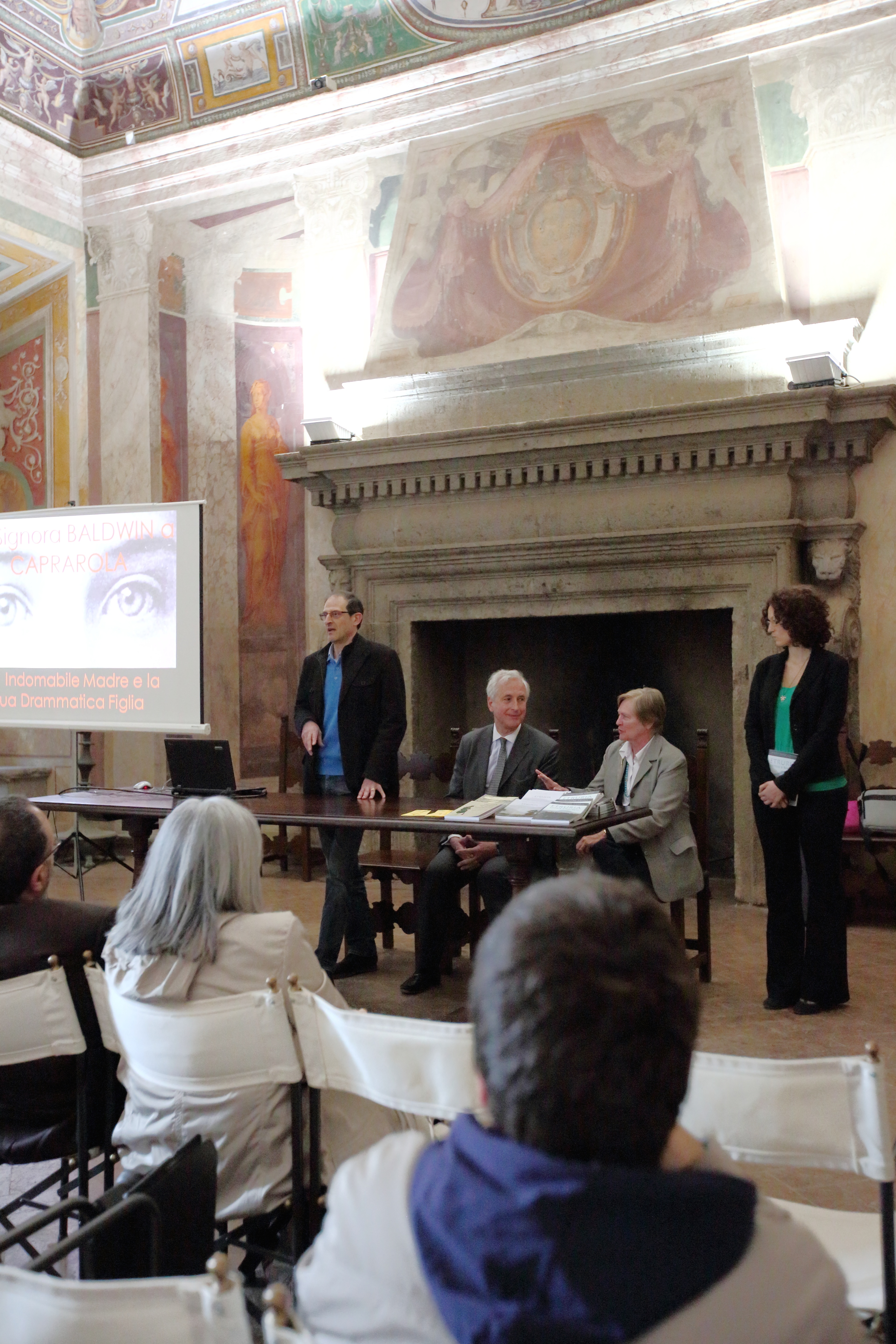
M.J. Cryan book presentation at Palazzo Farnese, Caprarola
Goodmorning Umbria, Agosto 2004 Orvieto
IL POZZO DELLA CAVA NELL’ULTIMO LIBRO DI MARY JANE CRYAN
È uscito da pochi giorni «Travels to Tuscany and Northern Lazio», di Mary Jane Cryan, che ripropone gli itinerari dei diari di viaggio che il Cardinale Henry, duca di York, ed alcuni suoi contemporanei scrissero nel Settecento.
Il libro, per larga parte in inglese, presenta anche un capitolo con i docu-menti originali redatti nell’italiano dell’epoca, ed una sezione fotografica con le bellezze dei luoghi toccati dai vari itinerari: Firenze, Pisa, Viterbo e Orvieto, meta obbligata per chi dalla Toscana vuole raggiungere il territorio della Tuscia laziale senza soluzione di continuità, sia fisica che culturale e spirituale.
Con nostra grande sorpresa, in questa sezione fotografica, le uniche immagini di Orvieto riguardano il Pozzo della Cava e le sue grotte, presentate tra le meraviglie scoperte dopo i viaggi riportati nel libro e riferiti al diciottesimo secolo (nel 1646, infatti, il pozzo era stato chiuso a pubblico).
Inutile dire che siamo lusingati da un tale trattamento, specie tenendo conto che il libro, acquistabile anche on-line, è stato pensato per il pubblico colto anglo-americano, sempre più alla ricerca di riferimenti fisici che possano stimolare l’immaginario.
È questo lo spirito con cui la Cryan, scrittrice e ricercatrice originaria del Massachusetts e naturalizzata italiana, ha redatto anche «Exploring Etruri» e gli altri testi della sua fortunata collana, che tanto successo ha avuto in Inghilterra e negli Stati Uniti.
«Travels to Tuscany and Northern Lazio» sarà presto presentato a Viterbo, Firenze, Pisa e Roma. Ma l’autrice non esclude, anzi auspica, di poterlo presentare anche ad Orvieto.
Sul prossimo numero ampio sevizio sul Pozzo della Cava.
Il Messaggero 21 agosto ’04 Orvieto.
Valorizzato dagli studiosi contemporanei ed ammirato da quelli del ’600
LA RISCOPERTA DEL POZZO DELLA CAVA
È il ”padre” del più famoso San Patrizio e cela tanti misteri
Chiuso nel 1646 è tornato ad essere visitabile solo una ventina
di anni fa
Orvieto – Un monumento tra tutti, rappresenta Orvieto. La mente andrebbe dritta al Duomo, oppure al Pozzo di San Patrizio e, invece, lo sguardo si ferma al Pozzo della Cava.
Così Mary Jane Cryan, nel suo libro che ripropone gli itinerari dei diari di viaggio che il Cardinale Henry, duca di York, ed alcuni suoi contemporanei scrissero nel Settecento. Il libro, per larga parte in inglese, presenta anche un capitolo con i documenti originali redatti nell’italiano dell’epoca, ed una sezione fotografica con le bellezze dei luoghi toccati dai vari itinerari: Firenze, Pisa, Viterbo e Orvieto.
Le uniche immagini di Orvieto riguardano il Pozzo della Cava e le sue grotte, presentate tra le meraviglie scoperte dopo i viaggi riportati nel libro e riferiti al diciottesimo secolo. Infatti, nel 1646 il Pozzo era stato chiuso e soltanto da una ventina di anni è tornato ad essere visibile. Quella chiusura, che segnò una delle tante leggende o verità che circolarono intorno al Pozzo, si protrasse per lunghi lustri. di Giulio Ladi