The Irish and English in Italy’s Risorgimento
July 4th, 2012 Tagged with: English soldiers • Garibaldi • Irish history • Irish in Italy • military history • Papal States • Risorgimento • studi risorgimentale
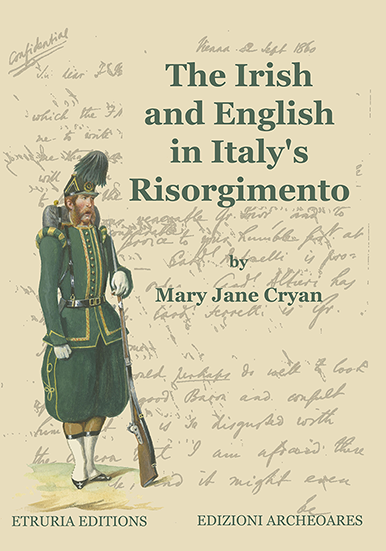 The Irish and English in Italy’s Risorgimento by Mary Jane Cryan fills the void of information in English about Italy’s 150th anniversary of unification being celebrated this year.
Until now the stories of the one thousand volunteers of St. Patrick’s Battalion who fought for the Pope and the English excursionists of the British Legion who sailed to Italy to support Garibaldi had been forgotten episodes of the Italian unification movement.
Thanks to historian and journalist Mary Jane Cryan, a resident in Italy since 1965, we now have information on what prompted both English and Irish men to risk their lives to fight in far-away Italy.
Dr. Cryan’s research, spanning several decades, has unearthed confidential letters, diaries and secret documents regarding the Irish and English volunteers who fought in Italy’s Risorgimento battles in 1860.
Contents include: The Foreign Brigades-An Irish Tradition, Attitudes Towards the Papacy in Ireland & England , Volunteers, culture shock, troubles, spies and malcontents, Problems and Propaganda, English Volunteers for Garibaldi, Controversy & Missing Medals, Caricatures, Scandals and Doubles, Sailing for Sicily, Irish Volunteers for Garibaldi, Correspondents, Papers and Problems, Poetry, Music and the Volunteer movement.
180 pages, index, maps, bibliography, 10 pages of color illustrations.
^^^^^^^^^^^^^^^^^^^^^^^^^^^^^^^^^^^^^^^^^^^^^^^^^^^^^^^^^^^^^^^^^^^^^
Send a message to macryan at alice dot it or fill out the contact page.
^^^^^^^^^^^^^^^^^^^^^^^^^^^^^^^^^^^^^^^^^^^^^^^^^^^^^^^^^^^^^^^^^^^^^^^^^^^^
Reviews Recensioni
‘The Irish and English in Italy`s Risorgimento’ by Mary Jane Cryan is a superb book, wonderfully written, giving a clear and concise account of the events and beautifully illustrated. It is a huge contribution to the material available on the period. In my own case I was able to find references to an individual in whom I have an interest and fill in a huge amount of detail on his life which would otherwise have been closed to me. Thank you, Mary Jane, for the time and effort you so obviously put in to your research. You should be very proud of this book.
Las Fallon, Dublin, Author: ‘Dublin Fire Brigade and the Irish Revolution’ (Dublin 2012) and ‘The Firemen`s Tale:the burning of the Custom House 1921’ (Dublin 2015).
^^^^^^^^
In 2011, in recognition of the 150th anniversary of the unification of Italy–the Risorgimento–author Mary Jane Cryan produced a book about the Irish and English who participated in the process. Yes, this is one of those niche interest books–and perhaps a very small niche. Only 200 copies of the book were produced, and they can be ordered from the author. But the book is ideal for uncovering the fine detail desired by, for example, a historical novelist or writer of narrative history.
Perhaps you, like me, were unaware that any Irish or English participated in the unification effort in Italy. The Irish mostly joined forces behind the Roman Catholic church and the pope, whose control of central Italy was threatened, though a few supported Garibaldi. For the English, who for more than a decade had hosted a number of well-known Italian exiles, Garibaldi was a hero.
Cryan describes the experiences of both groups, as documented in personal and official correspondence, news reports and editorials, and other contemporary sources. In addition to key players, Cryan includes the experiences of a wide variety of people who participated in various ways–soldiers, journalists, wives, fund-raisers. The views of these participants, mostly outsiders but actively involved, add color and interest to the book. Did I say color? There are great color illustrations too!
Cryan’s sources include material brought to light in recent years, and the book has end-notes, appendices, and bibliography.
Sandra Frykholm
^^^^^^^^^
Il nuovo ultimo lavoro di Mary Jane Cryan si occupa ancora una volta della connection tra il mondo anglo-sassone e la nostra terra:Italia e in particolare l’alto Lazio visto dagli occhi di uomini provenienti dall’Irlanda e dall’Inghilterra, emigrati a causa dei due principali motivi che spingevano a muoversi dal proprio paese, cioè l’arte e la guerra. Ed è segnato, il libro, dalla consueta sapienza che l’autrice possiede nell’indagare il passato, come già avevamo sperimentato nel seguire le orme del cardinale Henry Stuart (Travels to Tuscany and Northern Lazio) e di molti altri viaggiatori tra giardini e palazzi dei borghi della nostra regione (Vetralla: the English Connection ).
Quasi a ritrovare antiche radici di un legame che lei stessa oggi tiene saldo e vivo, il lavoro di Mary Jane Cryan sembra quello di narrare la storia di una terra straordinaria attraverso gli occhi di chi nel passato ha fatto la sua stessa scelta: mettersi in cammino, con un qualche ideale fisso in mente, e scoprire tesori e bellezze molto spesso dimenticate.
Siamo nel 1860, e chi si fosse trovato nello Stato della Chiesa in quegli anni cruciali avrebbe forse incontrato qualche soldato straniero vestito con una strana divisa e che a mala pena sapeva pronunciare due o tre parole in italiano. Un migliaio di irlandesi, memori della bontà che papa Pio IX manifestò loro durante la grande carestia che flagellò Irlanda nel 1848-49, non esitarono a scendere in Italia ed entrare nelle truppe pontificie.
Combatterono per il papa nelle più cruente battaglie nel tentativo di difesa del territori della Chiesa: Ancona, Castelfidardo, Spoleto e Perugia. Non solo contadini e operai, ma anche medici e ufficiali delle accademie militari viaggiarono attraverso Belgio, Francia e Austria, altri imbarcati a Marsiglia e diretti a Civitavecchia per entrare nelle file dell’esercito del papa.
Giunti a destinazione non trovarono ovunque benevola accoglienza: dovettero persino subire il discredito che alcune spie inglesi insinuarono nella popolazione o i tentativi che gli stessi inglesi operavano, mediante denaro o altre facilitazioni, per indurli alla diserzione.
E’ insomma evidente quanto sia affascinante la pagina di storia del nostro Risorgimento che Mary Jane Cryan riporta alla luce, accompagnando il lettore,proprio in occasione del 150° anniversario dell’Unità d’Italia, in un istruttivo viaggio nel passato.
Luca Pesante, storico, Roma e Bagnoregio
^^^^^^^^^^^
Mary Jane Cryan has produced a uniquely valuable and interesting book incorporating materials from archives in Rome and the Vatican rarely consulted by any author. It is in part the tragic story of Irishmen who fled their own oppressed country to fight for the earthly kingdom of their Church, at a time when Pope Pius IX was widely seen as a liberal turned reactionary. In England, the cause of Italian unification under Vittorio Emanuele II and the exploits of Giuseppe Garibaldi led to the “English battalion” in Italy, which included men like Colonel John Dunne, known, as Cryan says, as “one of the great protagonists of the European liberal movement.” One hopes Cryan’s next work may tell us more about Americans in the Risorgimento, including figures whom she mentions here, like “Admiral” De Rohan who provided the vessels for Garibaldi’s expedition to Sicily.
Ambassador (ret.) Peter Bridges
Ho letto con grande interesse il bel libro di Mary Jane e l’ho trovato ricco di fatti che non conoscevo, tra l’altro tutti ben documentati. In Italia durante i festeggiamenti per i 150 anni dell’unità nazionale tutti ma proprio tutti (e quasi sempre senza averne diritto) si sono presi dei meriti per quella unione: dalla Rai che ha coniato spot pubblicitari per invitare a pagare il canone tv, alle imprese industriali, ai comici e agli attori, al mondo dello sport. Chi vuol saperne di più e meglio su quei fatti dovrebbe porre attenzione a quanti – tra questi Mary Jane Cryan – portano alla ribalta dai polverosi archivi e biblioteche le verità nascoste.
Lucio Martino, storico, Ancona, Italy
Grazie a una ricerca a tappeto nelle biblioteche e negli archivi italiani, vaticani e britannici, l’autrice ricostruisce la partecipazione di irlandesi ed inglesi al Risorgimento. La particolarità risiede nel fatto che essi hanno combattuto in entrambi i fronti: si sono infatti arruolati nelle truppe pontificie e in quelle garibaldine. In alcuni casi la partecipazione militare è stata causa di prolungati contatti con l’Italia ed anche di migrazioni rivista “Studi Emigrazione” (n. 182, 2011)
Prof. Matteo Sanfilippo, storico, Roma
Una nuova luce sugli avvenimenti dell’Unità d’Italia, vista e combattuta da chi italiano non era, ma che dalla penisola fu attratto e nella quale cercò di far prevalere ed esaltare gli ideali di libertà e rinnovamento. Le vicende storiche legate ai volontari, sia del St. Patrick’s Battalion, combattenti per il Papa Re da un lato, sia degli English Excursionists della British Legion, sostenitori di Garibaldi dall’altro, sono state dimenticate dalla storiografia ufficiale legata allo studio dell’unificazione italiana. Grazie a quest’opera abbiamo una visione di quello che fu il ruolo di questi militari: lettere confidenziali, diari e documenti segreti riguardanti le due tipologie di volontari hanno messo in evidenza gli umori, le passioni, le abilità, gli atteggiamenti e le vicissitudini chi ha contribuito da straniero, ma con grande passione e forte spirito europeo ante litteram, alla costruzione dell’Italia moderna.
Redazione, Società Italiana di Storia Araldica, SISA, Torino
Click here to order your copy of this limited, numbered edition – Only 10 copies remain.
Cost 15 euro plus postage – Payment with paypal or bonifico bancario in Italia.
Free shipment to Italian addresses. Spedizione gratis in Italia.